Pioneering QSP
Since 2001
Pioneering QSP
Since 2001
Pioneering QSP
Since 2001
RES is the trusted QSP partner of over 50 leading pharmaceutical & biotechnology companies.
RES is the trusted QSP partner of over 50 leading pharmaceutical & biotechnology companies.
RES is the trusted QSP partner of over 50 leading pharmaceutical & biotechnology companies.
~100% Customer Repeat Rate
~100% Customer Repeat Rate
~100% Customer Repeat Rate















A Commitment to Scientific Rigor, Accountability, and Trust
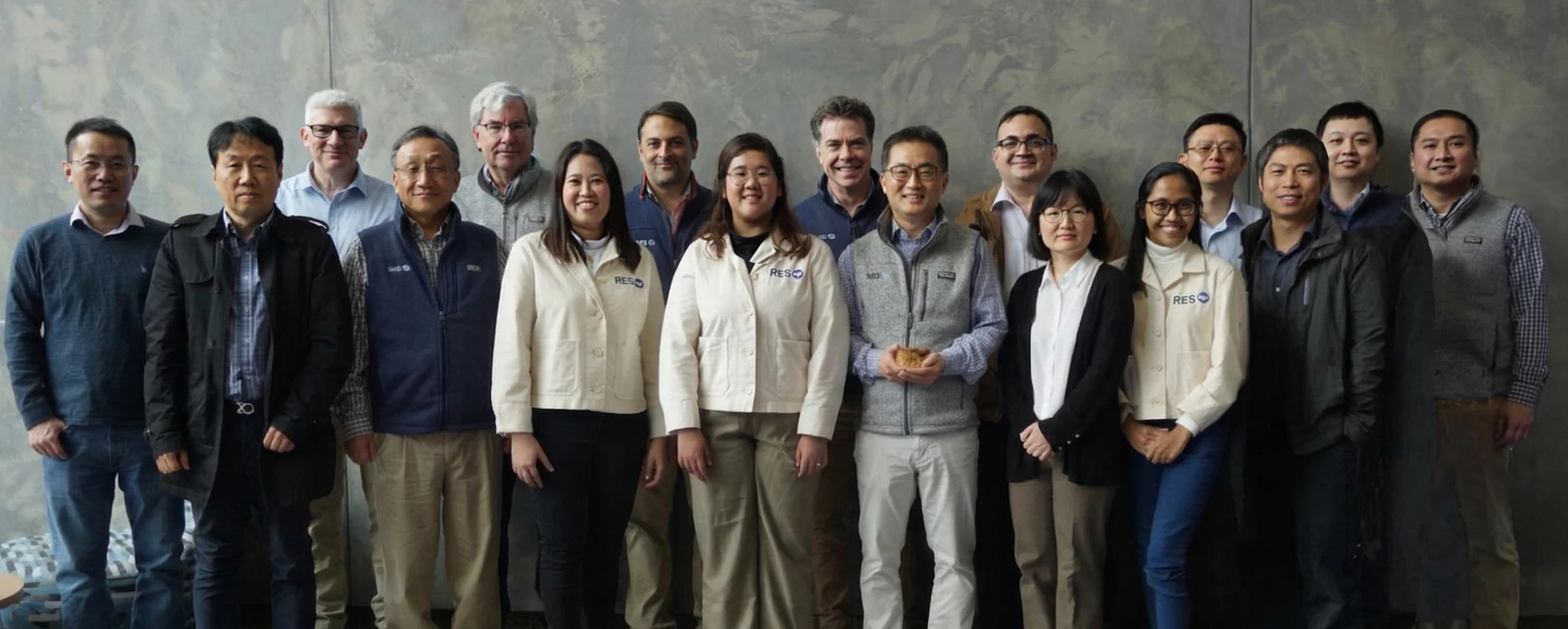
RES brings an interdisciplinary team to each project including biologists, modelers, and project managers to ensure the project meets your goals on schedule. Through these successful collaborations, we become a trusted partner helping our customers make the right decisions.

Wide Scope of QSP Services

300+ Projects and Many FDA Regulatory Approvals

100+ Diseases Modeled with Diverse Modalities and Stages
Our QSP Modeling Experience
Our QSP Modeling Experience
Our QSP Modeling Experience
Oncology
Autoimmunity & Inflammation
Rare Disease
Neuroscience
Infectious Disease
Toxicity
Indicators
Non-small cell lung carcinoma (NSCLC)
Small cell lung carcinoma (SCLC)
Acute lymphoblastic leukemia (ALL)
Non-Hodgkin's lymphoma (NHL)
Acute myeloid leukemia (AML)
Colorectal cancer (CRC)
Breast cancer
Pancreatic cancer
Drug Modalities
Antibody-drug conjugates (ADC), including bispecifics
T-cell engagers (BiTEs, bispecific Ab, etc.)
Small molecule inhibitors (mEGFR, mALK, SHP2, etc.)
Small molecule DNA repair inhibitors (ATRi, ATMi, etc.)
Oncolytic viruses w/ immune modulating "cargo"
Checkpoint inhibitor mAbs
PEG-conjugated cytokines
Oncology
Autoimmunity & Inflammation
Rare Disease
Neuroscience
Infectious Disease
Toxicity
Indicators
Non-small cell lung carcinoma (NSCLC)
Small cell lung carcinoma (SCLC)
Acute lymphoblastic leukemia (ALL)
Non-Hodgkin's lymphoma (NHL)
Acute myeloid leukemia (AML)
Colorectal cancer (CRC)
Breast cancer
Pancreatic cancer
Drug Modalities
Antibody-drug conjugates (ADC), including bispecifics
T-cell engagers (BiTEs, bispecific Ab, etc.)
Small molecule inhibitors (mEGFR, mALK, SHP2, etc.)
Small molecule DNA repair inhibitors (ATRi, ATMi, etc.)
Oncolytic viruses w/ immune modulating "cargo"
Checkpoint inhibitor mAbs
PEG-conjugated cytokines
FDA Regulatory Approvals
FDA Regulatory Approvals
FDA Regulatory Approvals

RES supported the development of many drug programs that have achieved FDA regulatory approval.
Our QSP modeling helps teams generate human dose predictions needed to move confidently through critical regulatory submissions and milestones.
Featured Case Studies
Featured Case Studies
Featured Case Studies
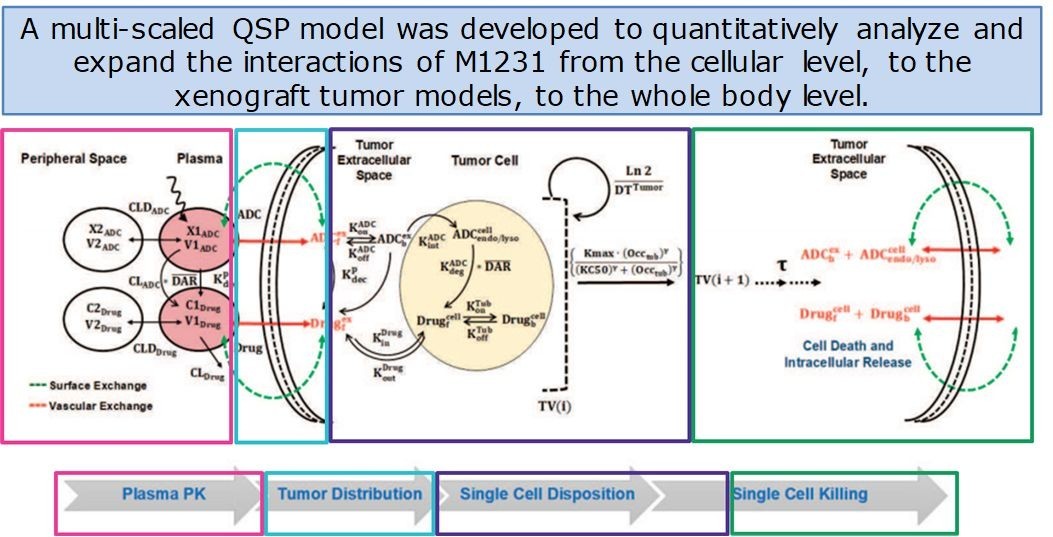

Translational PK/PD/efficacy modeling and efficacious human dose prediction for a first-in-class MUC1-EGFR (M1231) bispecific antibody drug conjugate
M1231 is a first-in-class bispecific antibody–drug conjugate targeting MUC1 and EGFR, designed to internalize into tumor cells and release a hemiasterlin-related microtubule inhibitor payload.
A multiscale systems pharmacology model integrated in vitro internalization data, tumor growth inhibition in MUC1-expressing xenograft models, and target-mediated drug disposition modeling in cynomolgus monkeys, with allometric scaling to predict human pharmacokinetics and tumor response.
Simulations predicted tumor stasis beginning at 2.4 mg/kg every three weeks and maximal regression at 4.3 mg/kg Q3W, informing dose selection for the ongoing first-in-human clinical trial (NCT04695847).
01 Discovery
02 Pre-Clinical
03 Clinical
Translational PK/PD/efficacy modeling and efficacious human dose prediction for a first-in-class MUC1-EGFR (M1231) bispecific antibody drug conjugate
M1231 is a first-in-class bispecific antibody–drug conjugate targeting MUC1 and EGFR, designed to internalize into tumor cells and release a hemiasterlin-related microtubule inhibitor payload.
A multiscale systems pharmacology model integrated in vitro internalization data, tumor growth inhibition in MUC1-expressing xenograft models, and target-mediated drug disposition modeling in cynomolgus monkeys, with allometric scaling to predict human pharmacokinetics and tumor response.
Simulations predicted tumor stasis beginning at 2.4 mg/kg every three weeks and maximal regression at 4.3 mg/kg Q3W, informing dose selection for the ongoing first-in-human clinical trial (NCT04695847).
01 Discovery
02 Pre-Clinical
03 Clinical
Translational PK/PD/efficacy modeling and efficacious human dose prediction for a first-in-class MUC1-EGFR (M1231) bispecific antibody drug conjugate
M1231 is a first-in-class bispecific antibody–drug conjugate targeting MUC1 and EGFR, designed to internalize into tumor cells and release a hemiasterlin-related microtubule inhibitor payload.
A multiscale systems pharmacology model integrated in vitro internalization data, tumor growth inhibition in MUC1-expressing xenograft models, and target-mediated drug disposition modeling in cynomolgus monkeys, with allometric scaling to predict human pharmacokinetics and tumor response.
Simulations predicted tumor stasis beginning at 2.4 mg/kg every three weeks and maximal regression at 4.3 mg/kg Q3W, informing dose selection for the ongoing first-in-human clinical trial (NCT04695847).
01 Discovery
02 Pre-Clinical
03 Clinical
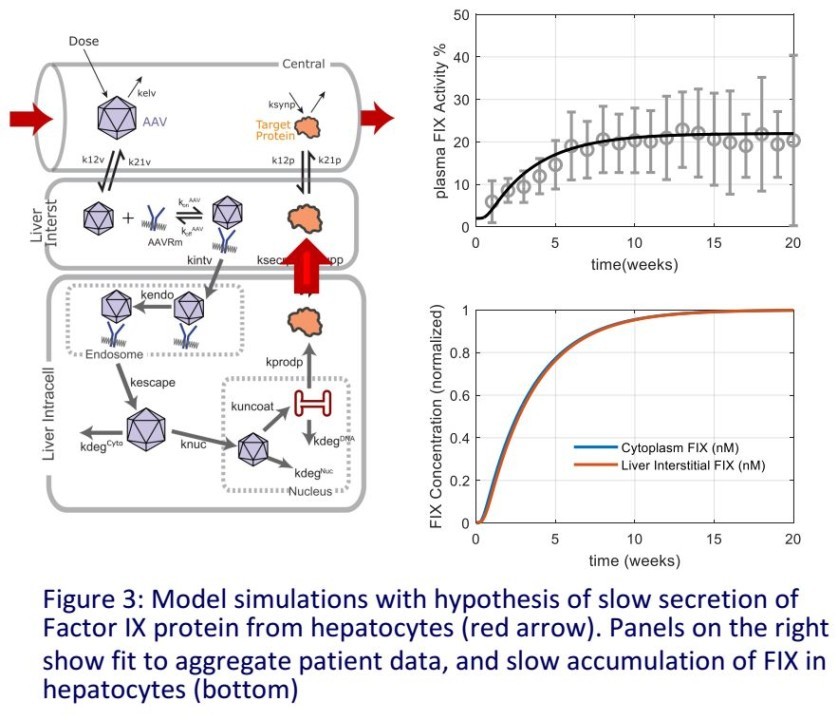

Developing a robust Quantitative Systems Pharmacology model of adeno-associated virus (AAV) based gene therapy for clinical applications
Hemophilia B is a genetic bleeding disorder caused by deficiency of Factor IX, leading to impaired clot formation and recurrent bleeding episodes.
To support the development of adeno-associated virus (AAV)–based gene therapy to restore Factor IX production, a mechanistic quantitative systems pharmacology (QSP) model was established that integrates a minimal physiologically based pharmacokinetic (PBPK) description of systemic and hepatic biodistribution with intracellular processes such as receptor binding, endocytosis, nuclear transport, and transgene expression.
Calibration with preclinical and emerging clinical data enabled quantitative prediction of Factor IX exposure–response and informed dose selection, providing a scalable translational framework adaptable to other AAV serotypes and liver-directed gene therapy programs.
01 Discovery
02 Pre-Clinical
03 Clinical
Developing a robust Quantitative Systems Pharmacology model of adeno-associated virus (AAV) based gene therapy for clinical applications
Hemophilia B is a genetic bleeding disorder caused by deficiency of Factor IX, leading to impaired clot formation and recurrent bleeding episodes.
To support the development of adeno-associated virus (AAV)–based gene therapy to restore Factor IX production, a mechanistic quantitative systems pharmacology (QSP) model was established that integrates a minimal physiologically based pharmacokinetic (PBPK) description of systemic and hepatic biodistribution with intracellular processes such as receptor binding, endocytosis, nuclear transport, and transgene expression.
Calibration with preclinical and emerging clinical data enabled quantitative prediction of Factor IX exposure–response and informed dose selection, providing a scalable translational framework adaptable to other AAV serotypes and liver-directed gene therapy programs.
01 Discovery
02 Pre-Clinical
03 Clinical
Developing a robust Quantitative Systems Pharmacology model of adeno-associated virus (AAV) based gene therapy for clinical applications
Hemophilia B is a genetic bleeding disorder caused by deficiency of Factor IX, leading to impaired clot formation and recurrent bleeding episodes.
To support the development of adeno-associated virus (AAV)–based gene therapy to restore Factor IX production, a mechanistic quantitative systems pharmacology (QSP) model was established that integrates a minimal physiologically based pharmacokinetic (PBPK) description of systemic and hepatic biodistribution with intracellular processes such as receptor binding, endocytosis, nuclear transport, and transgene expression.
Calibration with preclinical and emerging clinical data enabled quantitative prediction of Factor IX exposure–response and informed dose selection, providing a scalable translational framework adaptable to other AAV serotypes and liver-directed gene therapy programs.
01 Discovery
02 Pre-Clinical
03 Clinical
All Your Questions Answered
All Your Questions Answered
All Your Questions Answered
If you have further questions, please reach out via our Contact page.
What exactly does RES do, and how can you help me?
How do I work with RES? What are the first steps?
How much does a project cost and how long will it take?
What does "RES" stand for?