
Case Studies
A selection of case studies showing how we apply QSP modeling to solve complex drug development and translational challenges.
Case Studies
A selection of case studies showing how we apply QSP modeling to solve complex drug development and translational challenges.
Case Studies
A selection of case studies showing how we apply QSP modeling to solve complex drug development and translational challenges.
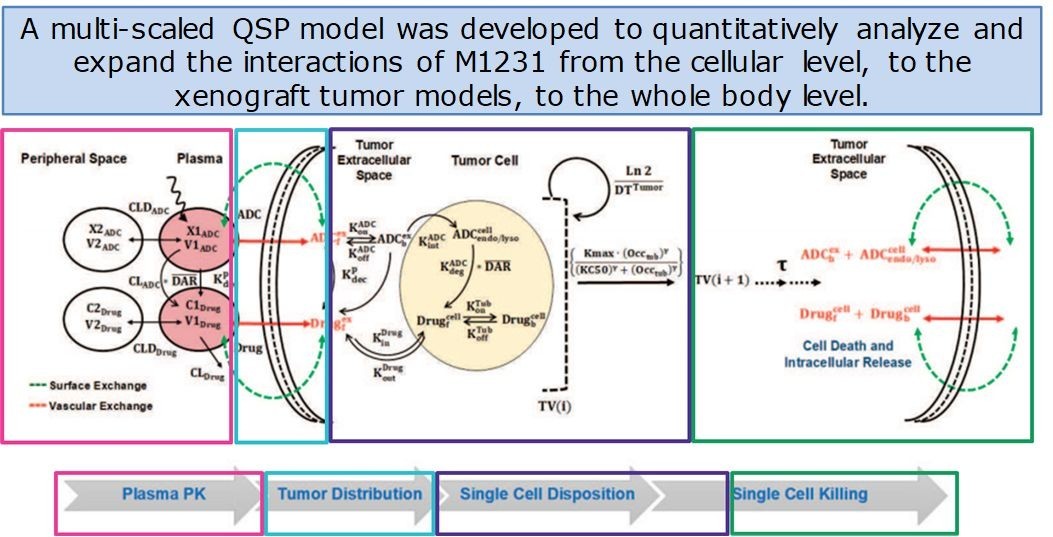

Translational PK/PD/efficacy modeling and efficacious human dose prediction for a first-in-class MUC1-EGFR (M1231) bispecific antibody drug conjugate
M1231 is a first-in-class bispecific antibody–drug conjugate targeting MUC1 and EGFR, designed to internalize into tumor cells and release a hemiasterlin-related microtubule inhibitor payload.
A multiscale systems pharmacology model integrated in vitro internalization data, tumor growth inhibition in MUC1-expressing xenograft models, and target-mediated drug disposition modeling in cynomolgus monkeys, with allometric scaling to predict human pharmacokinetics and tumor response.
Simulations predicted tumor stasis beginning at 2.4 mg/kg every three weeks and maximal regression at 4.3 mg/kg Q3W, informing dose selection for the ongoing first-in-human clinical trial (NCT04695847).
01 Discovery
02 Pre-Clinical
03 Clinical
Translational PK/PD/efficacy modeling and efficacious human dose prediction for a first-in-class MUC1-EGFR (M1231) bispecific antibody drug conjugate
M1231 is a first-in-class bispecific antibody–drug conjugate targeting MUC1 and EGFR, designed to internalize into tumor cells and release a hemiasterlin-related microtubule inhibitor payload.
A multiscale systems pharmacology model integrated in vitro internalization data, tumor growth inhibition in MUC1-expressing xenograft models, and target-mediated drug disposition modeling in cynomolgus monkeys, with allometric scaling to predict human pharmacokinetics and tumor response.
Simulations predicted tumor stasis beginning at 2.4 mg/kg every three weeks and maximal regression at 4.3 mg/kg Q3W, informing dose selection for the ongoing first-in-human clinical trial (NCT04695847).
01 Discovery
02 Pre-Clinical
03 Clinical
Translational PK/PD/efficacy modeling and efficacious human dose prediction for a first-in-class MUC1-EGFR (M1231) bispecific antibody drug conjugate
M1231 is a first-in-class bispecific antibody–drug conjugate targeting MUC1 and EGFR, designed to internalize into tumor cells and release a hemiasterlin-related microtubule inhibitor payload.
A multiscale systems pharmacology model integrated in vitro internalization data, tumor growth inhibition in MUC1-expressing xenograft models, and target-mediated drug disposition modeling in cynomolgus monkeys, with allometric scaling to predict human pharmacokinetics and tumor response.
Simulations predicted tumor stasis beginning at 2.4 mg/kg every three weeks and maximal regression at 4.3 mg/kg Q3W, informing dose selection for the ongoing first-in-human clinical trial (NCT04695847).
01 Discovery
02 Pre-Clinical
03 Clinical
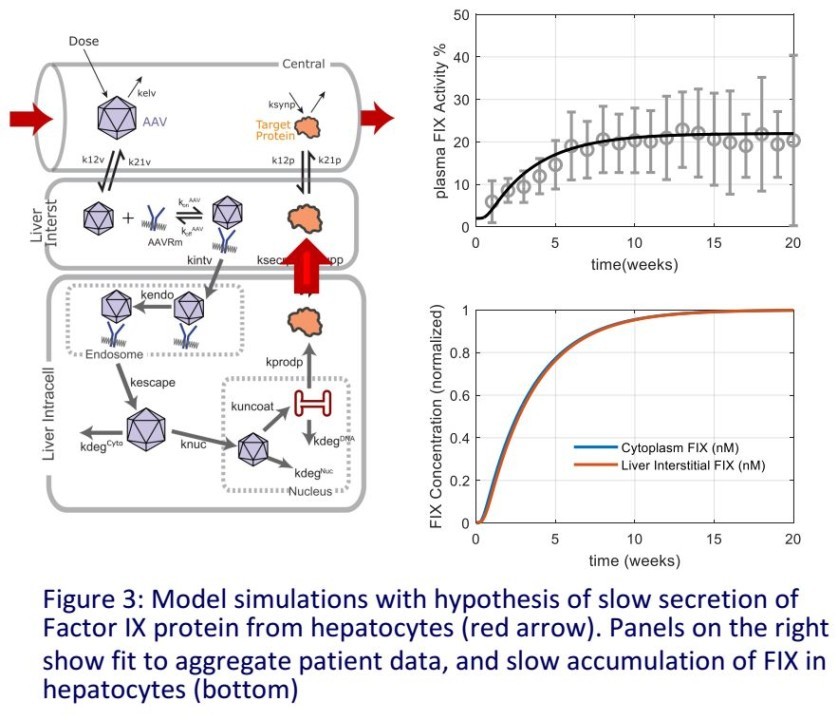

Developing a robust Quantitative Systems Pharmacology model of adeno-associated virus (AAV) based gene therapy for clinical applications
Hemophilia B is a genetic bleeding disorder caused by deficiency of Factor IX, leading to impaired clot formation and recurrent bleeding episodes.
To support the development of adeno-associated virus (AAV)–based gene therapy to restore Factor IX production, a mechanistic quantitative systems pharmacology (QSP) model was established that integrates a minimal physiologically based pharmacokinetic (PBPK) description of systemic and hepatic biodistribution with intracellular processes such as receptor binding, endocytosis, nuclear transport, and transgene expression.
Calibration with preclinical and emerging clinical data enabled quantitative prediction of Factor IX exposure–response and informed dose selection, providing a scalable translational framework adaptable to other AAV serotypes and liver-directed gene therapy programs.
01 Discovery
02 Pre-Clinical
03 Clinical
Developing a robust Quantitative Systems Pharmacology model of adeno-associated virus (AAV) based gene therapy for clinical applications
Hemophilia B is a genetic bleeding disorder caused by deficiency of Factor IX, leading to impaired clot formation and recurrent bleeding episodes.
To support the development of adeno-associated virus (AAV)–based gene therapy to restore Factor IX production, a mechanistic quantitative systems pharmacology (QSP) model was established that integrates a minimal physiologically based pharmacokinetic (PBPK) description of systemic and hepatic biodistribution with intracellular processes such as receptor binding, endocytosis, nuclear transport, and transgene expression.
Calibration with preclinical and emerging clinical data enabled quantitative prediction of Factor IX exposure–response and informed dose selection, providing a scalable translational framework adaptable to other AAV serotypes and liver-directed gene therapy programs.
01 Discovery
02 Pre-Clinical
03 Clinical
Developing a robust Quantitative Systems Pharmacology model of adeno-associated virus (AAV) based gene therapy for clinical applications
Hemophilia B is a genetic bleeding disorder caused by deficiency of Factor IX, leading to impaired clot formation and recurrent bleeding episodes.
To support the development of adeno-associated virus (AAV)–based gene therapy to restore Factor IX production, a mechanistic quantitative systems pharmacology (QSP) model was established that integrates a minimal physiologically based pharmacokinetic (PBPK) description of systemic and hepatic biodistribution with intracellular processes such as receptor binding, endocytosis, nuclear transport, and transgene expression.
Calibration with preclinical and emerging clinical data enabled quantitative prediction of Factor IX exposure–response and informed dose selection, providing a scalable translational framework adaptable to other AAV serotypes and liver-directed gene therapy programs.
01 Discovery
02 Pre-Clinical
03 Clinical
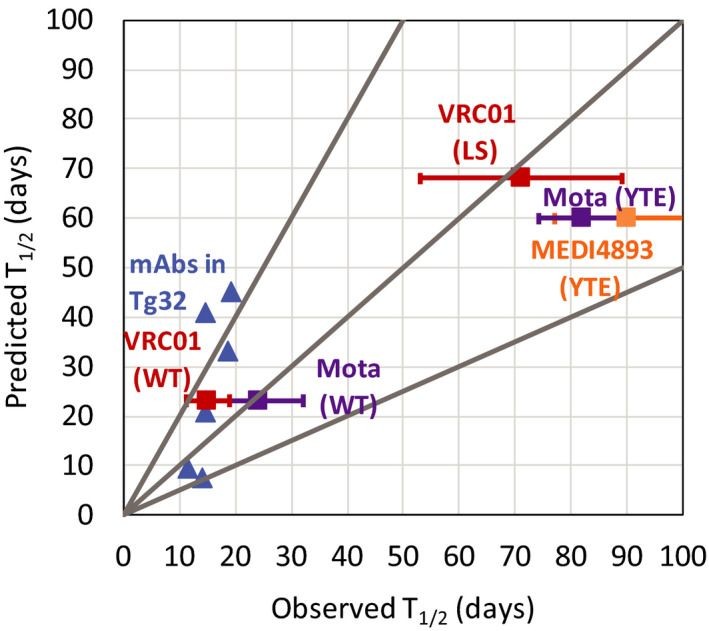
A Physiologically-Based Pharmacokinetic Model for the Prediction of "Half-Life Extension" and "Catch and Release" Monoclonal Antibody Pharmacokinetics
Monoclonal antibodies (mAbs) can be engineered with “extended half-life” and “catch and release” properties to improve systemic exposure and target coverage, yet predicting their in vivo performance remains challenging. A mechanistic physiologically based pharmacokinetic (PBPK) model was developed to describe intracellular trafficking, neonatal Fc receptor (FcRn) recycling, nonspecific clearance, and target binding as a function of affinity, expression, and turnover. The model accurately predicted terminal half-life (82% within two-fold of observed values) in human FcRn transgenic (Tg32) mice and humans, and captured pharmacokinetic and target coverage trends across antibodies with different catch-and-release characteristics, providing a translational framework to guide antibody engineering and expand druggable targets.
01 Discovery
02 Pre-Clinical
03 Clinical
A Physiologically-Based Pharmacokinetic Model for the Prediction of "Half-Life Extension" and "Catch and Release" Monoclonal Antibody Pharmacokinetics
Monoclonal antibodies (mAbs) can be engineered with “extended half-life” and “catch and release” properties to improve systemic exposure and target coverage, yet predicting their in vivo performance remains challenging. A mechanistic physiologically based pharmacokinetic (PBPK) model was developed to describe intracellular trafficking, neonatal Fc receptor (FcRn) recycling, nonspecific clearance, and target binding as a function of affinity, expression, and turnover. The model accurately predicted terminal half-life (82% within two-fold of observed values) in human FcRn transgenic (Tg32) mice and humans, and captured pharmacokinetic and target coverage trends across antibodies with different catch-and-release characteristics, providing a translational framework to guide antibody engineering and expand druggable targets.
01 Discovery
02 Pre-Clinical
03 Clinical
A Physiologically-Based Pharmacokinetic Model for the Prediction of "Half-Life Extension" and "Catch and Release" Monoclonal Antibody Pharmacokinetics
Monoclonal antibodies (mAbs) can be engineered with “extended half-life” and “catch and release” properties to improve systemic exposure and target coverage, yet predicting their in vivo performance remains challenging. A mechanistic physiologically based pharmacokinetic (PBPK) model was developed to describe intracellular trafficking, neonatal Fc receptor (FcRn) recycling, nonspecific clearance, and target binding as a function of affinity, expression, and turnover. The model accurately predicted terminal half-life (82% within two-fold of observed values) in human FcRn transgenic (Tg32) mice and humans, and captured pharmacokinetic and target coverage trends across antibodies with different catch-and-release characteristics, providing a translational framework to guide antibody engineering and expand druggable targets.
01 Discovery
02 Pre-Clinical
03 Clinical
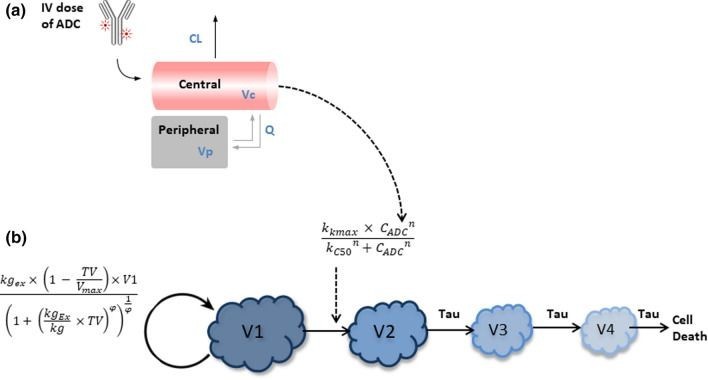
Use of translational modeling and simulation for quantitative comparison of PF-06804103, a new generation HER2 ADC, with Trastuzumab-DM1
Human epidermal growth factor receptor 2 (HER2)–positive cancers require improved therapies due to resistance and suboptimal durability observed with existing antibody–drug conjugates (ADCs). To address this, a translational pharmacokinetic/pharmacodynamic (PK/PD) modeling framework was applied to compare PF-06804103, a next-generation HER2-targeting ADC, with the approved agent T-DM1, integrating nonlinear PK driven by shed HER2 and tumor growth inhibition data from multiple xenograft models. The model identified tumor static concentration thresholds and predicted greater potency for PF-06804103, supporting its differentiated efficacy profile and clinical development potential.
01 Discovery
02 Pre-Clinical
03 Clinical
Use of translational modeling and simulation for quantitative comparison of PF-06804103, a new generation HER2 ADC, with Trastuzumab-DM1
Human epidermal growth factor receptor 2 (HER2)–positive cancers require improved therapies due to resistance and suboptimal durability observed with existing antibody–drug conjugates (ADCs). To address this, a translational pharmacokinetic/pharmacodynamic (PK/PD) modeling framework was applied to compare PF-06804103, a next-generation HER2-targeting ADC, with the approved agent T-DM1, integrating nonlinear PK driven by shed HER2 and tumor growth inhibition data from multiple xenograft models. The model identified tumor static concentration thresholds and predicted greater potency for PF-06804103, supporting its differentiated efficacy profile and clinical development potential.
01 Discovery
02 Pre-Clinical
03 Clinical
Use of translational modeling and simulation for quantitative comparison of PF-06804103, a new generation HER2 ADC, with Trastuzumab-DM1
Human epidermal growth factor receptor 2 (HER2)–positive cancers require improved therapies due to resistance and suboptimal durability observed with existing antibody–drug conjugates (ADCs). To address this, a translational pharmacokinetic/pharmacodynamic (PK/PD) modeling framework was applied to compare PF-06804103, a next-generation HER2-targeting ADC, with the approved agent T-DM1, integrating nonlinear PK driven by shed HER2 and tumor growth inhibition data from multiple xenograft models. The model identified tumor static concentration thresholds and predicted greater potency for PF-06804103, supporting its differentiated efficacy profile and clinical development potential.
01 Discovery
02 Pre-Clinical
03 Clinical
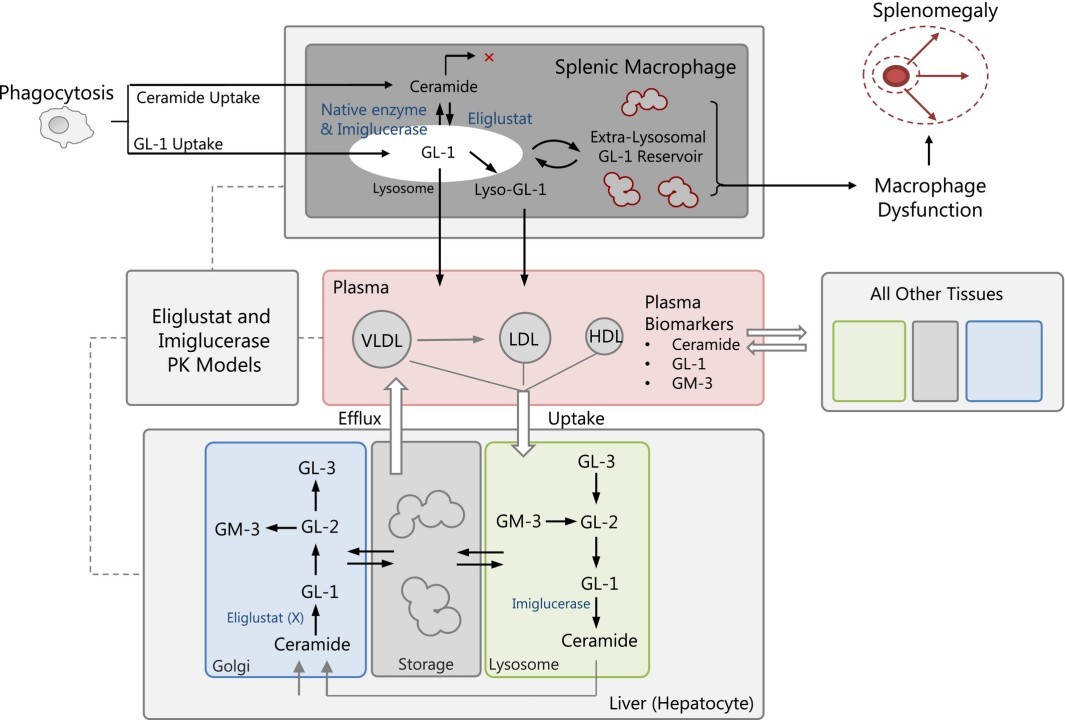

A Quantitative Systems Pharmacology Model of Gaucher Disease Type 1 Provides Mechanistic Insight Into the Response to Substrate Reduction Therapy With Eliglustat
Gaucher’s disease type 1 (GD1) is a lysosomal storage disorder associated with significant morbidity due to manifestations such as splenomegaly, hematologic abnormalities, and bone complications, with treatment options including enzyme replacement therapy (ERT) and substrate reduction therapy (SRT). To better characterize therapeutic responses, a multiscale quantitative systems pharmacology (QSP) model was developed to mechanistically describe the effects of eliglustat, the first-line approved SRT, in both treatment-naïve and ERT-stabilized adult patients. The model captured spleen volume reduction and was applied to virtual patient populations spanning genotype–phenotype-defined disease severities, providing a mechanistic platform to predict response across heterogeneous GD1 treatment settings.
01 Discovery
02 Pre-Clinical
03 Clinical
A Quantitative Systems Pharmacology Model of Gaucher Disease Type 1 Provides Mechanistic Insight Into the Response to Substrate Reduction Therapy With Eliglustat
Gaucher’s disease type 1 (GD1) is a lysosomal storage disorder associated with significant morbidity due to manifestations such as splenomegaly, hematologic abnormalities, and bone complications, with treatment options including enzyme replacement therapy (ERT) and substrate reduction therapy (SRT). To better characterize therapeutic responses, a multiscale quantitative systems pharmacology (QSP) model was developed to mechanistically describe the effects of eliglustat, the first-line approved SRT, in both treatment-naïve and ERT-stabilized adult patients. The model captured spleen volume reduction and was applied to virtual patient populations spanning genotype–phenotype-defined disease severities, providing a mechanistic platform to predict response across heterogeneous GD1 treatment settings.
01 Discovery
02 Pre-Clinical
03 Clinical
A Quantitative Systems Pharmacology Model of Gaucher Disease Type 1 Provides Mechanistic Insight Into the Response to Substrate Reduction Therapy With Eliglustat
Gaucher’s disease type 1 (GD1) is a lysosomal storage disorder associated with significant morbidity due to manifestations such as splenomegaly, hematologic abnormalities, and bone complications, with treatment options including enzyme replacement therapy (ERT) and substrate reduction therapy (SRT). To better characterize therapeutic responses, a multiscale quantitative systems pharmacology (QSP) model was developed to mechanistically describe the effects of eliglustat, the first-line approved SRT, in both treatment-naïve and ERT-stabilized adult patients. The model captured spleen volume reduction and was applied to virtual patient populations spanning genotype–phenotype-defined disease severities, providing a mechanistic platform to predict response across heterogeneous GD1 treatment settings.
01 Discovery
02 Pre-Clinical
03 Clinical
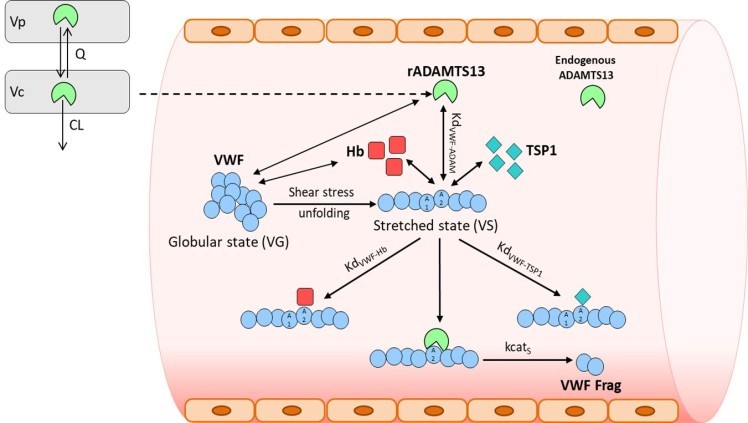

Development of a QSP model for ADAMTS13 and von Willebrand factor interactions (page 33)
Congenital thrombotic thrombocytopenic purpura (cTTP) is a rare hematologic disorder caused by severe ADAMTS13 deficiency, leading to accumulation of ultra-large von Willebrand factor (VWF) multimers and microvascular thrombosis. A mechanistic model was developed to characterize interactions among VWF, ADAMTS13, extracellular hemoglobin, and thrombospondin-1, incorporating literature-based kinetics and calibration to first-in-human recombinant ADAMTS13 (rADAMTS13) data. The model reproduced clinical VWF dynamics and provides a quantitative framework to evaluate rADAMTS13 therapy and other strategies targeting VWF processing.
01 Discovery
02 Pre-Clinical
03 Clinical
Development of a QSP model for ADAMTS13 and von Willebrand factor interactions (page 33)
Congenital thrombotic thrombocytopenic purpura (cTTP) is a rare hematologic disorder caused by severe ADAMTS13 deficiency, leading to accumulation of ultra-large von Willebrand factor (VWF) multimers and microvascular thrombosis. A mechanistic model was developed to characterize interactions among VWF, ADAMTS13, extracellular hemoglobin, and thrombospondin-1, incorporating literature-based kinetics and calibration to first-in-human recombinant ADAMTS13 (rADAMTS13) data. The model reproduced clinical VWF dynamics and provides a quantitative framework to evaluate rADAMTS13 therapy and other strategies targeting VWF processing.
01 Discovery
02 Pre-Clinical
03 Clinical
Development of a QSP model for ADAMTS13 and von Willebrand factor interactions (page 33)
Congenital thrombotic thrombocytopenic purpura (cTTP) is a rare hematologic disorder caused by severe ADAMTS13 deficiency, leading to accumulation of ultra-large von Willebrand factor (VWF) multimers and microvascular thrombosis. A mechanistic model was developed to characterize interactions among VWF, ADAMTS13, extracellular hemoglobin, and thrombospondin-1, incorporating literature-based kinetics and calibration to first-in-human recombinant ADAMTS13 (rADAMTS13) data. The model reproduced clinical VWF dynamics and provides a quantitative framework to evaluate rADAMTS13 therapy and other strategies targeting VWF processing.
01 Discovery
02 Pre-Clinical
03 Clinical
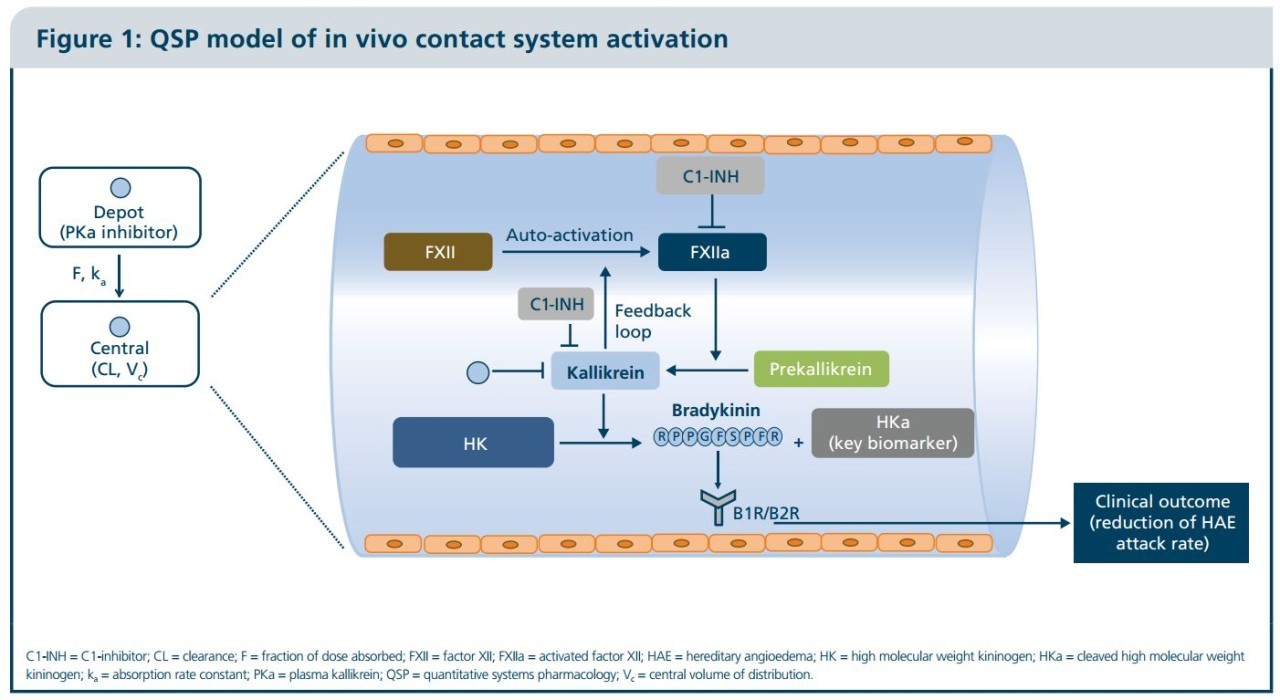
Hereditary angioedema (HAE) prophylaxis with plasma kallikrein inhibitors: Role of target binding kinetics, pharmacokinetics and treatment adherence (page 277)
Hereditary angioedema (HAE) is driven by uncontrolled activation of the contact system, leading to excessive plasma kallikrein activity and bradykinin production that causes recurrent swelling attacks. A quantitative systems pharmacology model incorporating key contact pathway components and a virtual HAE population was developed and verified using cleaved high molecular weight kininogen biomarkers and clinical data from lanadelumab, a monoclonal antibody targeting plasma kallikrein used for HAE prophylaxis, to evaluate the impact of target binding potency, pharmacokinetics, and treatment adherence. Simulations showed that sustained availability of free plasma kallikrein inhibitor and a half-life of at least two weeks markedly improve prophylactic efficacy, whereas short-acting inhibitors and missed doses substantially increase attack risk.
01 Discovery
02 Pre-Clinical
03 Clinical
Hereditary angioedema (HAE) prophylaxis with plasma kallikrein inhibitors: Role of target binding kinetics, pharmacokinetics and treatment adherence (page 277)
Hereditary angioedema (HAE) is driven by uncontrolled activation of the contact system, leading to excessive plasma kallikrein activity and bradykinin production that causes recurrent swelling attacks. A quantitative systems pharmacology model incorporating key contact pathway components and a virtual HAE population was developed and verified using cleaved high molecular weight kininogen biomarkers and clinical data from lanadelumab, a monoclonal antibody targeting plasma kallikrein used for HAE prophylaxis, to evaluate the impact of target binding potency, pharmacokinetics, and treatment adherence. Simulations showed that sustained availability of free plasma kallikrein inhibitor and a half-life of at least two weeks markedly improve prophylactic efficacy, whereas short-acting inhibitors and missed doses substantially increase attack risk.
01 Discovery
02 Pre-Clinical
03 Clinical
Hereditary angioedema (HAE) prophylaxis with plasma kallikrein inhibitors: Role of target binding kinetics, pharmacokinetics and treatment adherence (page 277)
Hereditary angioedema (HAE) is driven by uncontrolled activation of the contact system, leading to excessive plasma kallikrein activity and bradykinin production that causes recurrent swelling attacks. A quantitative systems pharmacology model incorporating key contact pathway components and a virtual HAE population was developed and verified using cleaved high molecular weight kininogen biomarkers and clinical data from lanadelumab, a monoclonal antibody targeting plasma kallikrein used for HAE prophylaxis, to evaluate the impact of target binding potency, pharmacokinetics, and treatment adherence. Simulations showed that sustained availability of free plasma kallikrein inhibitor and a half-life of at least two weeks markedly improve prophylactic efficacy, whereas short-acting inhibitors and missed doses substantially increase attack risk.
01 Discovery
02 Pre-Clinical
03 Clinical
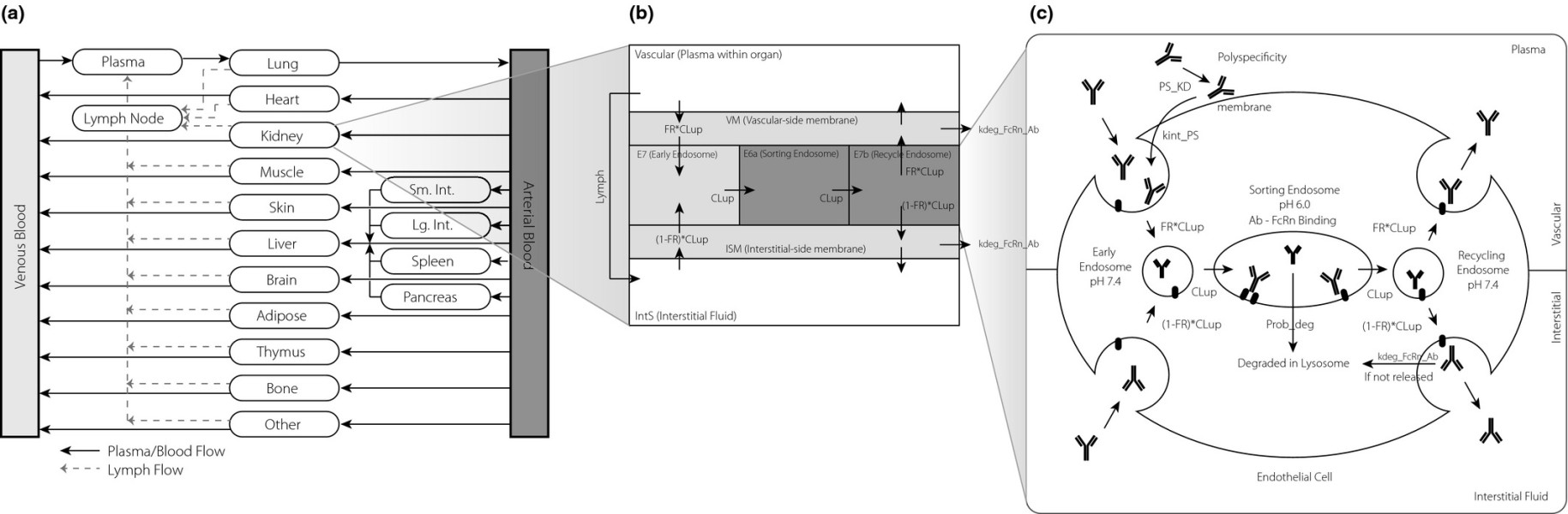
A Physiologically-Based Pharmacokinetic Model for the Prediction of Monoclonal Antibody Pharmacokinetics From In Vitro Data
Monoclonal antibody pharmacokinetics have traditionally been predicted using allometric scaling, with limited consideration of cross-species differences in neonatal Fc receptor affinity and intracellular trafficking mechanisms. To address this limitation, a mechanistic physiologically based pharmacokinetic model was developed that describes intracellular trafficking and FcRn recycling in human FcRn transgenic homozygous mice and humans, integrating antibody-specific in vitro data with species-specific tissue expression, physiological volumes, and blood flow. The model accurately predicted terminal half-life for 90% of evaluated antibodies within twofold error and provides a framework to predict linear pharmacokinetics a priori and evaluate engineered antibodies with pH-dependent target or FcRn binding to optimize pharmacokinetic and pharmacodynamic properties.
01 Discovery
02 Pre-Clinical
03 Clinical
A Physiologically-Based Pharmacokinetic Model for the Prediction of Monoclonal Antibody Pharmacokinetics From In Vitro Data
Monoclonal antibody pharmacokinetics have traditionally been predicted using allometric scaling, with limited consideration of cross-species differences in neonatal Fc receptor affinity and intracellular trafficking mechanisms. To address this limitation, a mechanistic physiologically based pharmacokinetic model was developed that describes intracellular trafficking and FcRn recycling in human FcRn transgenic homozygous mice and humans, integrating antibody-specific in vitro data with species-specific tissue expression, physiological volumes, and blood flow. The model accurately predicted terminal half-life for 90% of evaluated antibodies within twofold error and provides a framework to predict linear pharmacokinetics a priori and evaluate engineered antibodies with pH-dependent target or FcRn binding to optimize pharmacokinetic and pharmacodynamic properties.
01 Discovery
02 Pre-Clinical
03 Clinical
A Physiologically-Based Pharmacokinetic Model for the Prediction of Monoclonal Antibody Pharmacokinetics From In Vitro Data
Monoclonal antibody pharmacokinetics have traditionally been predicted using allometric scaling, with limited consideration of cross-species differences in neonatal Fc receptor affinity and intracellular trafficking mechanisms. To address this limitation, a mechanistic physiologically based pharmacokinetic model was developed that describes intracellular trafficking and FcRn recycling in human FcRn transgenic homozygous mice and humans, integrating antibody-specific in vitro data with species-specific tissue expression, physiological volumes, and blood flow. The model accurately predicted terminal half-life for 90% of evaluated antibodies within twofold error and provides a framework to predict linear pharmacokinetics a priori and evaluate engineered antibodies with pH-dependent target or FcRn binding to optimize pharmacokinetic and pharmacodynamic properties.
01 Discovery
02 Pre-Clinical
03 Clinical
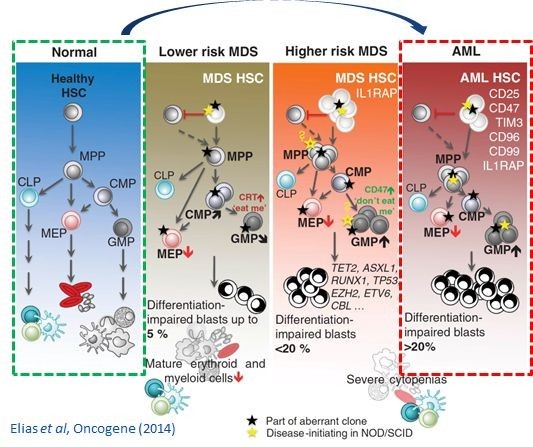

Integrated efficacy-safety QSP model of acute myeloid leukemia (AML) generates insights into the role of clinical dose schedules on cytopenia
Acute myeloid leukemia (AML) is an aggressive blood cancer marked by leukemic blast accumulation in the bone marrow that suppresses normal hematopoiesis, causing anemia, thrombocytopenia, and neutropenia and making it difficult to balance antitumor efficacy with hematologic safety in clinical dosing. An integrated quantitative systems pharmacology (QSP) model was developed that describes normal multilineage hematopoiesis, leukemic blast proliferation, and disease-induced cytopenia, and incorporates drug effects on both leukemic and normal progenitor cells to evaluate clinical dosing schedules. Model simulations recapitulated observed recovery times and provided insights into how different dose schedules can influence cytopenia and overall therapeutic outcomes in AML patients, supporting optimization of dosing strategies.
01 Discovery
02 Pre-Clinical
03 Clinical
Integrated efficacy-safety QSP model of acute myeloid leukemia (AML) generates insights into the role of clinical dose schedules on cytopenia
Acute myeloid leukemia (AML) is an aggressive blood cancer marked by leukemic blast accumulation in the bone marrow that suppresses normal hematopoiesis, causing anemia, thrombocytopenia, and neutropenia and making it difficult to balance antitumor efficacy with hematologic safety in clinical dosing. An integrated quantitative systems pharmacology (QSP) model was developed that describes normal multilineage hematopoiesis, leukemic blast proliferation, and disease-induced cytopenia, and incorporates drug effects on both leukemic and normal progenitor cells to evaluate clinical dosing schedules. Model simulations recapitulated observed recovery times and provided insights into how different dose schedules can influence cytopenia and overall therapeutic outcomes in AML patients, supporting optimization of dosing strategies.
01 Discovery
02 Pre-Clinical
03 Clinical
Integrated efficacy-safety QSP model of acute myeloid leukemia (AML) generates insights into the role of clinical dose schedules on cytopenia
Acute myeloid leukemia (AML) is an aggressive blood cancer marked by leukemic blast accumulation in the bone marrow that suppresses normal hematopoiesis, causing anemia, thrombocytopenia, and neutropenia and making it difficult to balance antitumor efficacy with hematologic safety in clinical dosing. An integrated quantitative systems pharmacology (QSP) model was developed that describes normal multilineage hematopoiesis, leukemic blast proliferation, and disease-induced cytopenia, and incorporates drug effects on both leukemic and normal progenitor cells to evaluate clinical dosing schedules. Model simulations recapitulated observed recovery times and provided insights into how different dose schedules can influence cytopenia and overall therapeutic outcomes in AML patients, supporting optimization of dosing strategies.
01 Discovery
02 Pre-Clinical
03 Clinical
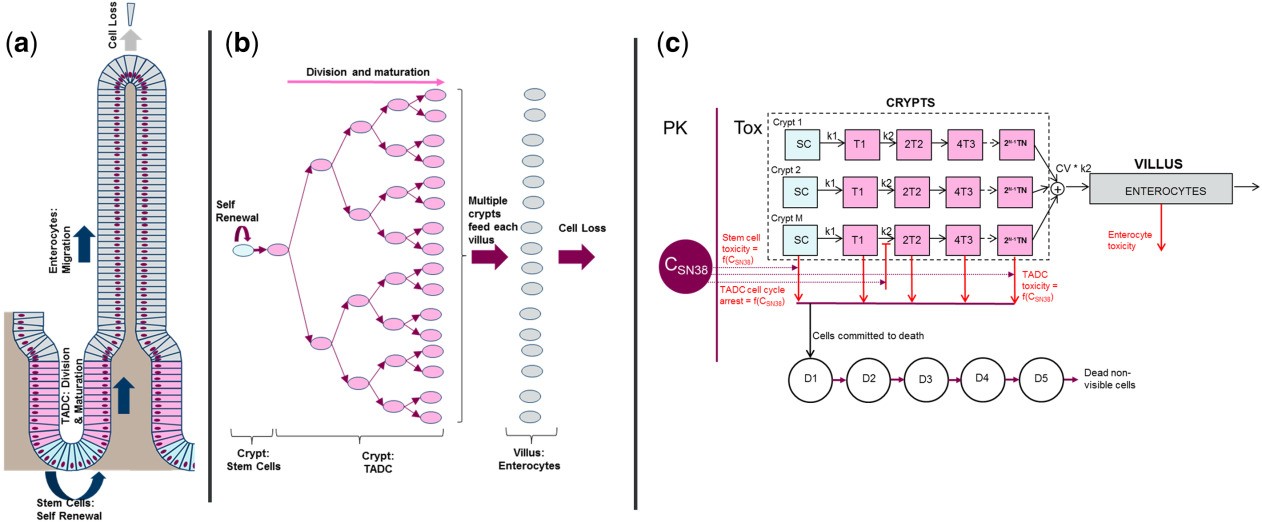

Systems Pharmacology Model of Gastrointestinal Damage Predicts Species Differences and Optimizes Clinical Dosing Schedules
Gastrointestinal adverse events are frequently dose-limiting for oncology agents, often requiring evaluation of alternative dosing schedules to optimize tolerability. A translational mathematical model was developed to predict clinical gastrointestinal toxicity from preclinical data, incorporating key intestinal biology including stem cells, daughter cells, and enterocytes, with system parameters informed by published human and rat data and drug-specific inputs derived from rat irinotecan histopathology. The model accurately reproduced rodent pathology and predicted the clinical time course of enterocyte loss, correctly differentiating higher adverse event severity with weekly dosing compared to a more tolerable every-three-week schedule.
01 Discovery
02 Pre-Clinical
03 Clinical
Systems Pharmacology Model of Gastrointestinal Damage Predicts Species Differences and Optimizes Clinical Dosing Schedules
Gastrointestinal adverse events are frequently dose-limiting for oncology agents, often requiring evaluation of alternative dosing schedules to optimize tolerability. A translational mathematical model was developed to predict clinical gastrointestinal toxicity from preclinical data, incorporating key intestinal biology including stem cells, daughter cells, and enterocytes, with system parameters informed by published human and rat data and drug-specific inputs derived from rat irinotecan histopathology. The model accurately reproduced rodent pathology and predicted the clinical time course of enterocyte loss, correctly differentiating higher adverse event severity with weekly dosing compared to a more tolerable every-three-week schedule.
01 Discovery
02 Pre-Clinical
03 Clinical
Systems Pharmacology Model of Gastrointestinal Damage Predicts Species Differences and Optimizes Clinical Dosing Schedules
Gastrointestinal adverse events are frequently dose-limiting for oncology agents, often requiring evaluation of alternative dosing schedules to optimize tolerability. A translational mathematical model was developed to predict clinical gastrointestinal toxicity from preclinical data, incorporating key intestinal biology including stem cells, daughter cells, and enterocytes, with system parameters informed by published human and rat data and drug-specific inputs derived from rat irinotecan histopathology. The model accurately reproduced rodent pathology and predicted the clinical time course of enterocyte loss, correctly differentiating higher adverse event severity with weekly dosing compared to a more tolerable every-three-week schedule.
01 Discovery
02 Pre-Clinical
03 Clinical
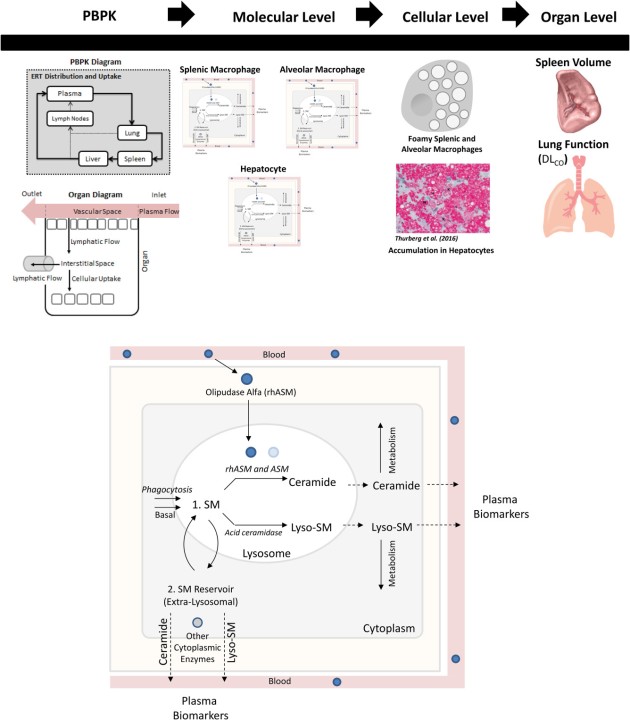
Quantitative Systems Pharmacology Modeling of Acid Sphingomyelinase Deficiency and the Enzyme Replacement Therapy Olipudase Alfa Is an Innovative Tool for Linking Pathophysiology and Pharmacology
Acid sphingomyelinase deficiency (ASMD) is a rare lysosomal storage disorder characterized by heterogeneous manifestations such as hepatosplenomegaly and pulmonary involvement, leading to substantial morbidity and mortality. To support development of olipudase alfa, a recombinant human acid sphingomyelinase enzyme replacement therapy targeting non-neurological disease manifestations, a multiscale mechanistic quantitative systems pharmacology (QSP) model was established linking enzymatic deficiency to molecular, cellular, and organ-level effects. Informed by disease progression data as well as preclinical and clinical studies, the model integrates patient-specific pharmacokinetics and disease severity markers to describe pharmacodynamic and clinical outcomes, providing a platform to assess variability and support extrapolation of treatment response from adults to pediatric patients.
01 Discovery
02 Pre-Clinical
03 Clinical
Quantitative Systems Pharmacology Modeling of Acid Sphingomyelinase Deficiency and the Enzyme Replacement Therapy Olipudase Alfa Is an Innovative Tool for Linking Pathophysiology and Pharmacology
Acid sphingomyelinase deficiency (ASMD) is a rare lysosomal storage disorder characterized by heterogeneous manifestations such as hepatosplenomegaly and pulmonary involvement, leading to substantial morbidity and mortality. To support development of olipudase alfa, a recombinant human acid sphingomyelinase enzyme replacement therapy targeting non-neurological disease manifestations, a multiscale mechanistic quantitative systems pharmacology (QSP) model was established linking enzymatic deficiency to molecular, cellular, and organ-level effects. Informed by disease progression data as well as preclinical and clinical studies, the model integrates patient-specific pharmacokinetics and disease severity markers to describe pharmacodynamic and clinical outcomes, providing a platform to assess variability and support extrapolation of treatment response from adults to pediatric patients.
01 Discovery
02 Pre-Clinical
03 Clinical
Quantitative Systems Pharmacology Modeling of Acid Sphingomyelinase Deficiency and the Enzyme Replacement Therapy Olipudase Alfa Is an Innovative Tool for Linking Pathophysiology and Pharmacology
Acid sphingomyelinase deficiency (ASMD) is a rare lysosomal storage disorder characterized by heterogeneous manifestations such as hepatosplenomegaly and pulmonary involvement, leading to substantial morbidity and mortality. To support development of olipudase alfa, a recombinant human acid sphingomyelinase enzyme replacement therapy targeting non-neurological disease manifestations, a multiscale mechanistic quantitative systems pharmacology (QSP) model was established linking enzymatic deficiency to molecular, cellular, and organ-level effects. Informed by disease progression data as well as preclinical and clinical studies, the model integrates patient-specific pharmacokinetics and disease severity markers to describe pharmacodynamic and clinical outcomes, providing a platform to assess variability and support extrapolation of treatment response from adults to pediatric patients.
01 Discovery
02 Pre-Clinical
03 Clinical
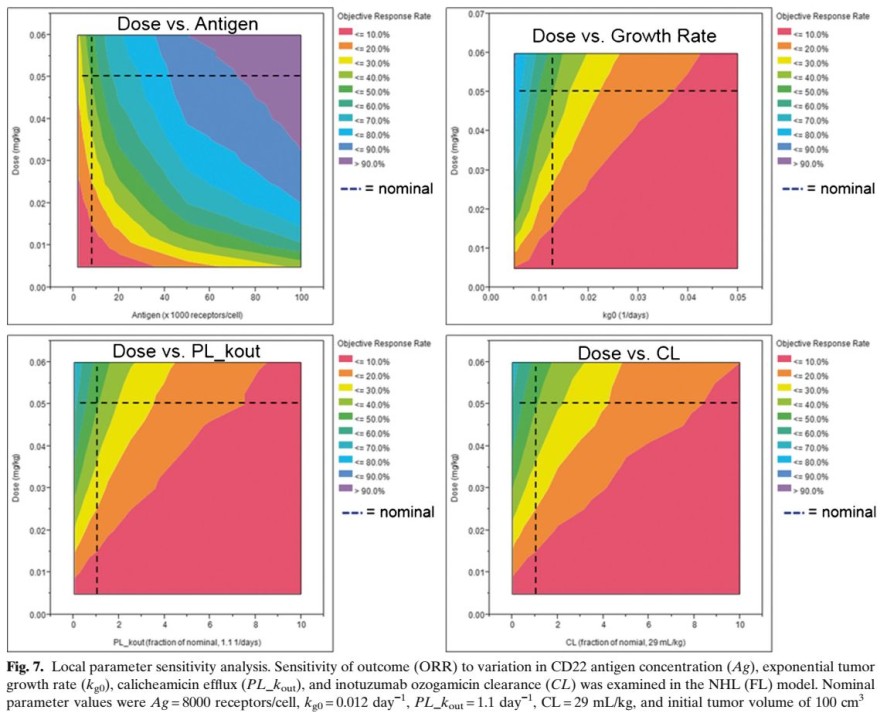
Preclinical to Clinical Translation of Antibody-Drug Conjugates Using PK/PD Modeling: a Retrospective Analysis of Inotuzumab Ozogamicin
B cell malignancies such as non-Hodgkin’s lymphoma (NHL) and acute lymphocytic leukemia (ALL) require optimized antibody–drug conjugate strategies to improve efficacy while managing systemic toxicity. Inotuzumab ozogamicin, a CD22-targeting antibody–drug conjugate that delivers the cytotoxic payload N-Ac-γ-calicheamicin DMH to malignant B cells, was evaluated using a multiscale mechanism-based PK/PD model integrating plasma pharmacokinetics, tumor distribution, CD22 binding and internalization, intracellular payload release, and tumor growth dynamics, with translation to human clinical settings. The model successfully predicted progression-free survival, identified tumor growth kinetics, ADC pharmacokinetics, and payload efflux as key predictors of outcome, and suggested that fractionated dosing is advantageous in ALL but not NHL, supporting model-informed clinical development.
01 Discovery
02 Pre-Clinical
03 Clinical
Preclinical to Clinical Translation of Antibody-Drug Conjugates Using PK/PD Modeling: a Retrospective Analysis of Inotuzumab Ozogamicin
B cell malignancies such as non-Hodgkin’s lymphoma (NHL) and acute lymphocytic leukemia (ALL) require optimized antibody–drug conjugate strategies to improve efficacy while managing systemic toxicity. Inotuzumab ozogamicin, a CD22-targeting antibody–drug conjugate that delivers the cytotoxic payload N-Ac-γ-calicheamicin DMH to malignant B cells, was evaluated using a multiscale mechanism-based PK/PD model integrating plasma pharmacokinetics, tumor distribution, CD22 binding and internalization, intracellular payload release, and tumor growth dynamics, with translation to human clinical settings. The model successfully predicted progression-free survival, identified tumor growth kinetics, ADC pharmacokinetics, and payload efflux as key predictors of outcome, and suggested that fractionated dosing is advantageous in ALL but not NHL, supporting model-informed clinical development.
01 Discovery
02 Pre-Clinical
03 Clinical
Preclinical to Clinical Translation of Antibody-Drug Conjugates Using PK/PD Modeling: a Retrospective Analysis of Inotuzumab Ozogamicin
B cell malignancies such as non-Hodgkin’s lymphoma (NHL) and acute lymphocytic leukemia (ALL) require optimized antibody–drug conjugate strategies to improve efficacy while managing systemic toxicity. Inotuzumab ozogamicin, a CD22-targeting antibody–drug conjugate that delivers the cytotoxic payload N-Ac-γ-calicheamicin DMH to malignant B cells, was evaluated using a multiscale mechanism-based PK/PD model integrating plasma pharmacokinetics, tumor distribution, CD22 binding and internalization, intracellular payload release, and tumor growth dynamics, with translation to human clinical settings. The model successfully predicted progression-free survival, identified tumor growth kinetics, ADC pharmacokinetics, and payload efflux as key predictors of outcome, and suggested that fractionated dosing is advantageous in ALL but not NHL, supporting model-informed clinical development.
01 Discovery
02 Pre-Clinical
03 Clinical
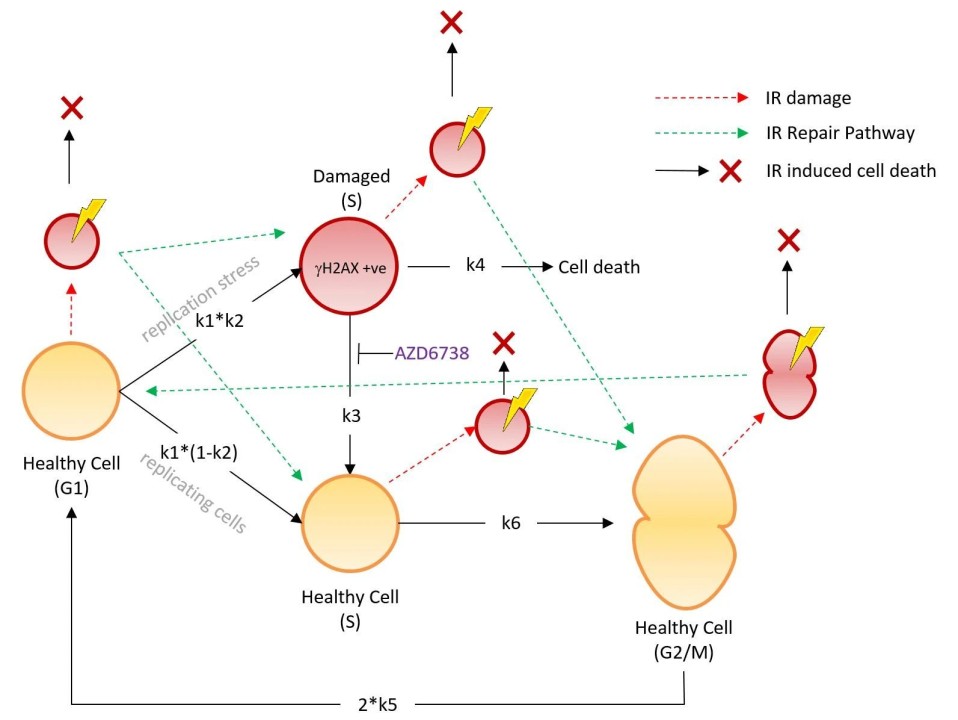
Dose and schedule predictions for the ATR inhibitor AZD6738
Optimizing drug dose and scheduling is critical in oncology, particularly as mono- and combination therapies become increasingly complex. A systems pharmacology framework was developed by extending a tumor growth PK/PD model with a mechanistic cell cycle model to simulate treatment with the ATR inhibitor AZD6738 alone and in combination with ionizing radiation, using quantitative in vitro assays of DNA damage and cell cycle transition for calibration. The model successfully predicted in vivo xenograft tumor growth and is being applied to inform phase I clinical trial design by supporting quantitative dose and schedule optimization.
01 Discovery
02 Pre-Clinical
03 Clinical
Dose and schedule predictions for the ATR inhibitor AZD6738
Optimizing drug dose and scheduling is critical in oncology, particularly as mono- and combination therapies become increasingly complex. A systems pharmacology framework was developed by extending a tumor growth PK/PD model with a mechanistic cell cycle model to simulate treatment with the ATR inhibitor AZD6738 alone and in combination with ionizing radiation, using quantitative in vitro assays of DNA damage and cell cycle transition for calibration. The model successfully predicted in vivo xenograft tumor growth and is being applied to inform phase I clinical trial design by supporting quantitative dose and schedule optimization.
01 Discovery
02 Pre-Clinical
03 Clinical
Dose and schedule predictions for the ATR inhibitor AZD6738
Optimizing drug dose and scheduling is critical in oncology, particularly as mono- and combination therapies become increasingly complex. A systems pharmacology framework was developed by extending a tumor growth PK/PD model with a mechanistic cell cycle model to simulate treatment with the ATR inhibitor AZD6738 alone and in combination with ionizing radiation, using quantitative in vitro assays of DNA damage and cell cycle transition for calibration. The model successfully predicted in vivo xenograft tumor growth and is being applied to inform phase I clinical trial design by supporting quantitative dose and schedule optimization.
01 Discovery
02 Pre-Clinical
03 Clinical
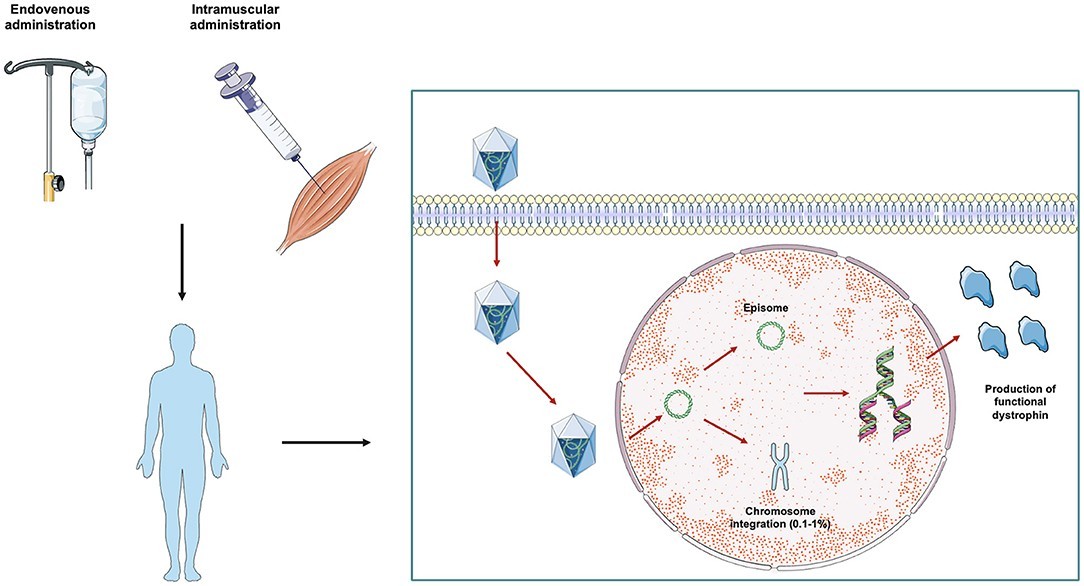

FDA clearance of IND application for Solid Bio’s SGT-003, a gene therapy for Duchenne Muscular Dystrophy.
Duchenne muscular dystrophy (DMD) is a rare, progressive genetic disorder caused by mutations in the dystrophin gene, leading to severe muscle degeneration and early loss of ambulation. Solid Biosciences announced that both the U.S. Food and Drug Administration (FDA) and Health Canada have cleared its Investigational New Drug (IND) application and Clinical Trial Application (CTA) for SGT-003, a next-generation microdystrophin gene therapy candidate. These regulatory clearances allow initiation of clinical studies in the United States and Canada to evaluate the safety and tolerability of SGT-003 in pediatric patients with DMD.
01 Discovery
02 Pre-Clinical
03 Clinical
FDA clearance of IND application for Solid Bio’s SGT-003, a gene therapy for Duchenne Muscular Dystrophy.
Duchenne muscular dystrophy (DMD) is a rare, progressive genetic disorder caused by mutations in the dystrophin gene, leading to severe muscle degeneration and early loss of ambulation. Solid Biosciences announced that both the U.S. Food and Drug Administration (FDA) and Health Canada have cleared its Investigational New Drug (IND) application and Clinical Trial Application (CTA) for SGT-003, a next-generation microdystrophin gene therapy candidate. These regulatory clearances allow initiation of clinical studies in the United States and Canada to evaluate the safety and tolerability of SGT-003 in pediatric patients with DMD.
01 Discovery
02 Pre-Clinical
03 Clinical
FDA clearance of IND application for Solid Bio’s SGT-003, a gene therapy for Duchenne Muscular Dystrophy.
Duchenne muscular dystrophy (DMD) is a rare, progressive genetic disorder caused by mutations in the dystrophin gene, leading to severe muscle degeneration and early loss of ambulation. Solid Biosciences announced that both the U.S. Food and Drug Administration (FDA) and Health Canada have cleared its Investigational New Drug (IND) application and Clinical Trial Application (CTA) for SGT-003, a next-generation microdystrophin gene therapy candidate. These regulatory clearances allow initiation of clinical studies in the United States and Canada to evaluate the safety and tolerability of SGT-003 in pediatric patients with DMD.
01 Discovery
02 Pre-Clinical
03 Clinical